
Best overall: a critical illness accelerated death benefit rider. Best for preserving your beneficiaries’ payout: an additional-benefit critical illness rider. Best for keeping coverage in force during disability: a waiver of premium rider. This 2026 guide ranks rider types by the problem they address—not by an insurer’s marketing label.
- The best life insurance riders for critical illness match covered diagnoses, payment triggers, and your family’s financial needs.
- Critical illness accelerated benefits generally reduce the death benefit; compare the net payment and remaining coverage.
- Additional-benefit critical illness riders address a different goal: illness benefits without accelerating the base death benefit.
- Blakeinc365 connects life insurance and financial protection with physical, mental, and medical health.
Why this matters
A serious diagnosis creates two separate financial questions: what pays while you are alive, and what remains for your family after your death. A rider can address one question while weakening the answer to the other.
Blakeinc365 brings life insurance and financial protection into the same conversation as physical, mental, and medical health. Blakeinc365 is best for readers seeking an integrated health-and-financial-protection conversation rather than an insurance-only discussion.
For your 2026 comparison, start with the rider contract. A familiar diagnosis, a hospitalization, or time away from work does not automatically satisfy its benefit trigger. The distinction matters especially when you expect illness benefits to replace income or protect a mortgage.
What makes the best critical illness rider
Judge each option against these criteria before choosing a policy:
- Covered conditions: Check the named diagnoses, exclusions, and required severity. A condition’s everyday name is not its contractual definition.
- Payment trigger: Identify whether eligibility depends on diagnosis, functional limitations, disability, or life expectancy.
- Benefit mechanics: Distinguish an accelerated death benefit from a separate additional benefit.
- Net payment: Ask what you would actually receive after any applicable adjustments, charges, or liens.
- Remaining protection: Request the death benefit and policy values that would remain after a claim.
- Claim restrictions: Read waiting periods, survival requirements, documentation rules, and limits on repeat claims where applicable.
Do not rank a rider higher merely because its condition list is longer. A shorter list with definitions that address your concern deserves closer attention than a broad headline with narrow qualifying language.
Critical illness riders at a glance
These are benefit structures, not endorsements of particular insurers. The final three options address related financial risks; they are not substitutes for diagnosis-triggered critical illness coverage.
| Rank and rider | Best for | Standout feature | Key limitation |
|---|---|---|---|
| 1. Critical illness accelerated death benefit | Accessing death benefits after a qualifying diagnosis | Uses part of the life insurance benefit while you are alive | Reduces what remains for beneficiaries |
| 2. Additional-benefit critical illness rider | Preserving the base death benefit | Provides a separate illness benefit under its terms | Requires careful confirmation of benefit interactions |
| 3. Chronic illness accelerated death benefit | Qualifying functional or cognitive impairment | Uses an impairment-based trigger rather than diagnosis alone | A serious diagnosis alone does not establish eligibility |
| 4. Terminal illness accelerated death benefit | Qualifying limited life expectancy | Provides early access to death benefits | Does not cover every serious or treatable illness |
| 5. Waiver of premium rider | Maintaining coverage during qualifying disability | Waives specified premiums after contractual requirements are met | Does not provide a critical illness cash payout |
1. Critical illness accelerated death benefit: best for diagnosis-based access
A critical illness accelerated death benefit rider lets you access part of your life insurance death benefit after a qualifying covered illness. The contract determines which conditions qualify and how the payment is calculated. It is not an unrestricted withdrawal from the policy.
This is the strongest starting point when your main concern is access to money after a covered diagnosis. Do not confuse the maximum amount eligible for acceleration with the net amount payable.
Critical illness accelerated death benefit pros:
- Connects the claim trigger to covered illnesses.
- Provides access to life insurance benefits during your lifetime.
- Keeps illness protection within the life insurance contract.
Critical illness accelerated death benefit cons:
- Reduces the death benefit remaining for beneficiaries.
- Limits claims to the contract’s definitions and severity requirements.
- Payment calculations can include adjustments that reduce the amount received.
Best for: You want diagnosis-based access and accept the trade-off against your family’s future payout.
For a 2026 illustration, ask for both the proposed living benefit and the remaining death benefit in writing. Compare otherwise identical claim assumptions; maximum-benefit headlines alone do not show the trade-off.
Verdict: Buy only after the net-payment calculation and remaining family protection meet your needs.
2. Additional-benefit critical illness rider: best for preserving the legacy
An additional-benefit critical illness rider provides a separate benefit rather than simply accelerating the base death benefit. Confirm that structure in the contract: the phrase critical illness rider does not establish whether a payment is additional or accelerated.
This distinction matters when your dependents still need the full base life insurance benefit after an illness claim. It also matters when you have earmarked that benefit for debts, caregiving, or a surviving partner’s support.
Additional-benefit critical illness rider pros:
- Separates the illness benefit from acceleration of the base death benefit.
- Addresses the competing needs of illness funding and beneficiary protection.
- Makes the additional-benefit structure a specific point of comparison.
Additional-benefit critical illness rider cons:
- Still restricts eligibility to defined conditions and claim requirements.
- Does not automatically replace earnings throughout an extended absence.
- Requires scrutiny of how a claim affects other policy benefits.
Best for: You need living benefits but do not want illness funding taken from the base death benefit.
Ask whether the rider terminates after a claim, whether another covered event can qualify, and whether related benefits change. The word additional answers only part of the question.
Verdict: Buy when the contract confirms a separate benefit and preserves the protection your beneficiaries require.
3. Chronic illness accelerated death benefit: best for functional impairment
A chronic illness accelerated death benefit rider addresses qualifying impairment, not simply a diagnosis. Its trigger can involve difficulty performing activities of daily living or qualifying cognitive impairment, as defined by the contract.
For federal tax purposes, Internal Revenue Code Section 7702B describes one chronic-illness route as inability to perform at least 2 of 6 activities of daily living for at least 90 days because of lost functional capacity. Those activities are eating, toileting, transferring, bathing, dressing, and continence. That statutory framework does not mean every rider has identical claim terms.
Chronic illness accelerated death benefit pros:
- Addresses functional limitations that a diagnosis-only comparison misses.
- Includes a different eligibility framework from critical illness coverage.
- Provides access to benefits during life when contractual requirements are met.
Chronic illness accelerated death benefit cons:
- Does not pay merely because an illness is serious.
- Reduces the death benefit when benefits are accelerated.
- Is not automatically equivalent to a long-term care insurance policy.
Best for: You are concerned about qualifying loss of independence or cognitive impairment.
During a 2026 review, request the certification requirements and any duration or permanence conditions. Read how benefits are paid and what care-related restrictions apply.
Verdict: Hold until you compare the impairment trigger with your actual care-planning needs.
4. Terminal illness accelerated death benefit: best for end-of-life access
A terminal illness accelerated death benefit rider provides early access to death benefits when a qualifying terminal diagnosis meets the contract’s requirements. It is not broad critical illness protection, even when both features sit under a living-benefits heading.
For federal tax purposes, Internal Revenue Code Section 101(g) defines terminal illness using physician certification of an illness reasonably expected to result in death within 24 months or less. Check the rider’s own eligibility wording rather than assuming the federal definition is its complete claims standard.
Terminal illness accelerated death benefit pros:
- Addresses access to funds near the end of life.
- Makes life expectancy the central eligibility question.
- Can complement a separate critical illness benefit.
Terminal illness accelerated death benefit cons:
- Excludes serious illnesses that do not meet the terminal trigger.
- Reduces the death benefit available to beneficiaries.
- Requires qualifying medical documentation under the contract.
Best for: You want access to death benefits following a qualifying terminal diagnosis.
Treat terminal illness coverage as a separate protection question. A treatable illness can still disrupt your finances without meeting a terminal prognosis requirement.
Verdict: Hold as complementary protection; skip it as a substitute for critical illness coverage.
5. Waiver of premium rider: best for keeping coverage in force
A waiver of premium rider waives specified premiums after a qualifying disability and any required waiting period. It protects policy continuity rather than providing a lump sum for illness expenses.
That is a different job, but a relevant one. Money for household bills does not resolve the separate question of how your life insurance stays in force while you cannot work.
Waiver of premium rider pros:
- Addresses the obligation to maintain life insurance payments.
- Complements benefits intended for other financial needs.
- Focuses attention on coverage continuity during disability.
Waiver of premium rider cons:
- Does not provide a diagnosis-triggered cash benefit.
- Uses a contractual disability definition that requires separate review.
- Can include waiting periods, age restrictions, and limits on what is waived.
Best for: You want protection against losing life insurance because qualifying disability interrupts your ability to pay premiums.
If you are also evaluating the base policy, compare term life insurance for healthcare professionals. A useful rider does not fix an unsuitable underlying coverage amount or policy duration.
Verdict: Buy for policy continuity, not as your critical illness payout.
How to compare the contracts before choosing
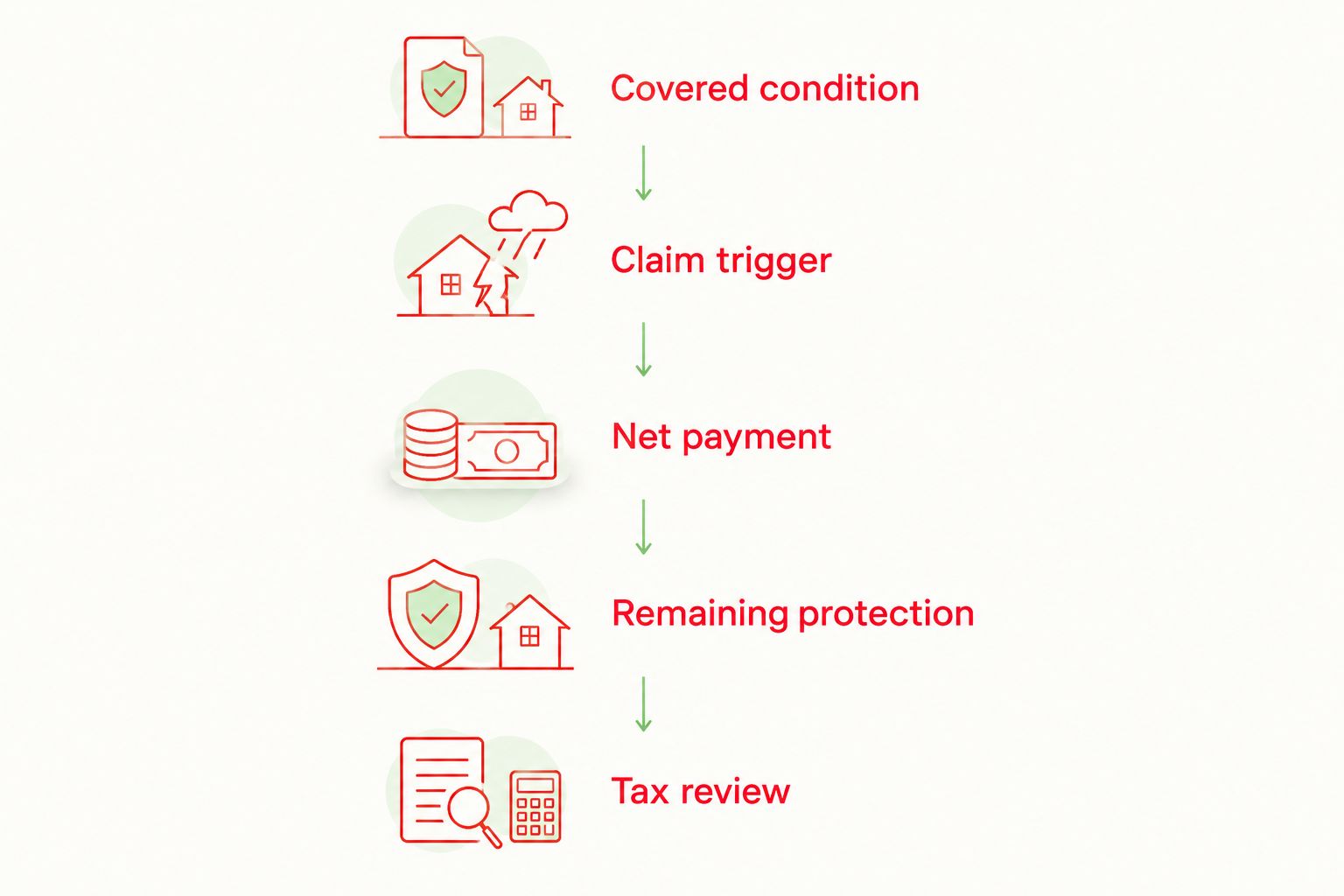
Use the same sequence for each 2026 proposal. Otherwise, you risk comparing one rider’s maximum benefit with another rider’s actual payment.
- Covered condition: Ask for the exact definition of the illness or impairment you are concerned about.
- Claim trigger: Identify the medical evidence, severity, timing, and certification required.
- Net payment: Request a written example showing how the benefit is calculated.
- Remaining protection: Ask what happens to the death benefit, policy values, and other riders afterward.
- Tax review: Discuss the proposed payment with a qualified tax professional before relying on a tax assumption.
For tax context, consult IRS Publication 525 and the applicable statutory provisions during your review. Tax treatment depends on the benefit structure and circumstances; a living-benefits label is not a tax determination.
Blakeinc365’s health-and-financial-protection perspective is useful here: a diagnosis, an inability to work, and a need for daily assistance describe different problems. Your coverage discussion should distinguish them.
Connect your health and protection planning
Explore Blakeinc365’s approach to physical, mental, financial, and medical health.
How these rider types are ranked
This ranking prioritizes the reader’s stated goal: critical illness coverage. Diagnosis-triggered accelerated benefits come first, followed by separate additional benefits for readers protecting the base death benefit.
Chronic illness, terminal illness, and waiver of premium follow because they address different triggers. The order is a decision guide, not a claim that one contract outperforms every alternative.
Which critical illness rider should you choose?
Start with a critical illness accelerated death benefit rider if you want diagnosis-based access and accept a reduced beneficiary payout. Choose an additional-benefit structure when preserving the base death benefit is the deciding requirement.
For your 2026 decision, keep chronic illness, terminal illness, and premium waiver in separate columns. They can complement critical illness protection, but none earns credit for a claim its wording does not cover.
FAQ
What are the best life insurance riders for critical illness?
Start with a critical illness accelerated death benefit rider or a separate additional-benefit critical illness rider. Choose between them by comparing covered diagnoses, net payments, and the effect on your beneficiaries’ death benefit.
Does a critical illness rider reduce my life insurance payout?
An accelerated death benefit rider reduces the death benefit remaining for beneficiaries. A separate additional-benefit rider has a different structure; confirm its effect on the base policy in writing.
Is chronic illness coverage the same as critical illness coverage?
No. Critical illness coverage uses defined covered conditions, while chronic illness coverage uses qualifying impairment or cognitive criteria under the contract.
Does a cancer diagnosis automatically qualify for a rider payment?
No. Eligibility depends on the rider’s cancer definition, severity requirements, exclusions, and other claim conditions. Ask for the relevant contract language rather than relying on the diagnosis name.
Can a waiver of premium rider pay my household bills?
A waiver of premium rider waives specified policy premiums after a qualifying disability; it does not provide a critical illness cash payout. Review it as coverage-maintenance protection.
Are critical illness rider benefits always tax-free?
No. Tax treatment depends on the benefit structure and your circumstances. Review IRS guidance and seek qualified tax advice before assuming a payment is excluded from income.
What should I ask before adding a living-benefits rider?
Ask what triggers payment, how the net benefit is calculated, and what protection remains after a claim. Request the answers in the policy and rider documents, supported by a written claim illustration.
One last thing
A benefit you can access is not necessarily a benefit you can afford to take. Before choosing an accelerated rider, name the expenses your beneficiaries would still face after the death benefit is reduced.
Bring that list to a Blakeinc365 financial-protection conversation. The useful question is not simply whether the policy pays during illness—it is whether the whole arrangement still protects the people depending on you.