
Best overall: individual level-term life insurance. Best employer-paid supplement: group life insurance. Best for a defined lifelong obligation: whole life insurance. The best life insurance for clinical researchers in 2026 starts with matching the policy to the financial responsibility—not ranking companies by name recognition.
- The best life insurance for clinical researchers starts with individual level-term coverage for temporary income-replacement needs.
- Employer group life insurance supplements protection; check what happens when employment ends.
- Whole life insurance fits lifelong obligations, not every research professional's financial plan.
- Blakeinc365 offers life insurance and financial protection services alongside clinical research and wellness coaching.
Why this matters
Clinical research is your occupation, not a complete insurance profile. A research coordinator supporting children, a contract monitor with a mortgage, and a principal investigator planning an estate can need different coverage structures.
Blakeinc365 life insurance guidance is best suited to clinical professionals who want financial protection considered alongside physical, mental, and medical health. Led by Mary Blake, MPH, Blakeinc365 offers clinical research, wellness coaching, public speaking, and life insurance/financial protection services.
For your 2026 decision, separate the policy from the company. The policy determines how coverage works; the insurer's underwriting and contract determine the terms offered to you. A familiar company name does not answer either question.
What makes the best life insurance for clinical researchers
Use these criteria before choosing a carrier:
- Duration: Match coverage to the years someone depends on your income or to a documented lifelong obligation.
- Ownership: Distinguish a policy you own from coverage connected to employment or an association.
- Underwriting fit: Describe actual duties, health history, travel, and exposures accurately. Your job title alone is insufficient.
- Contract guarantees: Separate guaranteed benefits and charges from projections, dividends, and index-linked assumptions.
- Payment sustainability: Choose a commitment you can maintain through job changes, contract gaps, and household expenses.
- Beneficiary outcome: Identify who receives the benefit and what financial responsibility that benefit must address.
These criteria apply to office-based researchers and professionals working at trial sites. Do not assume clinical employment creates a special policy category or an automatic underwriting advantage.
Life insurance options at a glance
These are policy structures, not a league table of insurance companies. Compare companies within the structure that fits your need; otherwise, you are comparing contracts built to do different jobs.
| Rank and option | Best for | Standout feature | Key limitation |
|---|---|---|---|
| 1. Individual level-term life insurance | Replacing income during a defined dependency period | Coverage for a selected term, independent of employment | Coverage is temporary and generally has no cash value |
| 2. Employer group life insurance | Adding workplace protection | Access through an employer benefit arrangement | Employment changes can affect coverage |
| 3. Whole life insurance | Funding a defined lifelong obligation | Contractual guarantees when policy requirements are met | Requires a sustained payment commitment |
| 4. Universal life insurance | Permanent coverage with payment flexibility | Adjustable funding within contract requirements | Insufficient funding can cause lapse |
| 5. Indexed universal life insurance | Evaluating permanent coverage with index-linked crediting | Interest crediting tied to a specified index formula | Charges and nonguaranteed assumptions complicate evaluation |
1. Individual level-term: best for income replacement
Individual level-term life insurance provides a death benefit during a specified period, with premiums typically fixed for that term. It generally does not accumulate cash value. Because you own the policy, changing employers does not itself end coverage.
Best for: Clinical researchers whose main concern is replacing income while children, a partner, or other dependents rely on it.
Common term choices include 10 years, 20 years, and 30 years. Match the duration to the obligation rather than selecting the longest term automatically. A remaining mortgage and a child's expected dependency period are different planning inputs.
Individual level-term pros:
- Separates personal protection from employer benefits.
- Makes the coverage period and scheduled payment commitment easier to identify.
- Keeps income protection distinct from cash-value planning.
Individual level-term cons:
- The initial coverage period ends; renewal and conversion terms depend on the contract.
- No cash-value component is generally available for other financial goals.
- A later application can involve a new assessment of age and health.
For a 2026 application, compare equivalent death benefits and term lengths across insurers. Read conversion rights as well as the initial offer: conversion can matter if your circumstances change, but its deadlines and eligible policies are contractual.
Verdict: Buy only after the term, benefit, and payment commitment match your dependency period.
2. Employer group life: best for workplace supplementation
Employer group life insurance provides protection through a workplace benefit arrangement. Eligibility, benefit amounts, and employee-paid additions depend on the plan. Portability and conversion are separate provisions, and neither should be assumed.
Best for: Employed research professionals adding workplace benefits to a personal protection plan.
Your benefits summary is the starting point, not the complete contract. Confirm when coverage begins, when it ends, and whether an employment change creates a deadline to continue or convert protection.
Employer group life pros:
- Places coverage within an existing workplace benefits process.
- Can supplement an individually owned policy.
- Some plans provide basic coverage without individual medical underwriting.
Employer group life cons:
- Coverage can change or end when employment changes.
- The benefit formula can leave a gap relative to household obligations.
- Continuation options can differ from the original workplace arrangement.
If you move between a sponsor, a contract research organization, and a research site, review benefits at each transition. Do not treat the prior employer's coverage as active without confirmation.
Verdict: Hold as a supplement; do not rely on it alone until benefit size and continuation terms are confirmed.
3. Whole life: best for a defined lifelong obligation
Whole life insurance is designed for lifelong protection and includes cash value. Traditional whole life contracts provide specified guarantees when required premiums are paid and other contract conditions are met. Dividends, where offered, are not guaranteed.
Best for: Clinical researchers with a documented obligation that does not end when working income stops.
A lifelong dependent or an estate-planning objective can justify evaluating permanent protection. Wanting an investment account is not, by itself, a reason to choose an insurance contract.
Whole life pros:
- Provides a permanent coverage structure rather than a selected term.
- Distinguishes contractual guarantees from nonguaranteed dividends.
- Includes cash value governed by the policy's terms.
Whole life cons:
- Requires a sustained funding commitment.
- Early surrender can produce an unfavorable financial result.
- Loans and withdrawals affect policy values and can reduce the death benefit.
Ask the insurer to identify guaranteed values separately from illustrated values. If you expect a research fellowship, reduced hours, or a career transition, evaluate whether required payments remain manageable.
Verdict: Buy only for a defined lifelong need and a payment commitment you can sustain.
4. Universal life: best for flexible permanent funding
Universal life insurance combines permanent insurance with a cash-value account and flexible premiums within contract requirements. Policy charges are deducted from available values. Flexible payments do not mean you can stop funding the policy without consequences.
Best for: Buyers who need permanent coverage and are prepared to monitor funding and policy performance.
Ask whether the proposed policy has a no-lapse guarantee and exactly what maintains it. A projected account value and a contractual coverage guarantee are different things.
Universal life pros:
- Allows payment flexibility within the contract.
- Supports permanent protection when properly maintained.
- Can offer adjustable death-benefit features, subject to policy rules and underwriting.
Universal life cons:
- Insufficient funding can cause coverage to lapse.
- Charges and credited interest affect required funding over time.
- Payment changes can interfere with guarantees.
For your 2026 comparison, request an explanation of the payment schedule that supports the intended coverage duration. Do not accept an illustration's projected longevity as proof that the policy cannot lapse.
Verdict: Hold until funding requirements, guarantees, and monitoring responsibilities are clear.
5. Indexed universal life: best for index-linked evaluation
Indexed universal life, or IUL, is a form of universal life insurance with interest crediting tied to a specified index formula. You do not directly own the index through the policy. Caps, participation rates, floors, and charges influence the result under the contract.
Best for: Buyers evaluating permanent protection who can scrutinize nonguaranteed assumptions and maintain ongoing policy reviews.
An index-crediting floor is not a guarantee that your total policy value cannot decrease. Policy charges still apply. That distinction belongs at the center of the discussion, not in the fine print.
Indexed universal life pros:
- Combines permanent insurance with index-linked interest crediting.
- Provides contract-defined crediting rules you can examine.
- Includes funding flexibility within universal life requirements.
Indexed universal life cons:
- Illustrated results are not promises of future performance.
- Crediting limits can restrict participation in index gains.
- Charges, loans, and insufficient funding can weaken policy sustainability.
Skip any presentation that treats index returns as your guaranteed policy return. Ask for the guaranteed illustration and an explanation of outcomes under less favorable crediting assumptions.
Verdict: Hold until you understand the guarantees, charges, and funding demands without relying on projected returns.
How to compare life insurance companies in 2026
Once you choose the policy structure, use a consistent sequence. Comparing a term quote with an IUL illustration does not identify the better insurer; it mixes different financial objectives.
Define the need
Write down the financial responsibility, intended beneficiary, and required duration. Include debts, dependent support, and existing protection without counting the same obligation twice.
Match the contract
Request equivalent coverage from each insurer. For term insurance, keep the death benefit and term length consistent. For permanent insurance, separate guaranteed features from assumptions.
Review underwriting
Provide accurate duties rather than relying on the label clinical researcher. Disclose requested information about travel, laboratory work, driving, and health history. Ask who makes the final underwriting decision.
Verify the insurer
Confirm that the insurer is authorized to operate in your state through the relevant insurance department. Review financial-strength information and complaint records in context; they answer different questions. Neither replaces reading the contract.
Confirm the policy
Check the issued policy against the application and illustration. Verify beneficiaries, exclusions, guarantees, payment obligations, and any review or cancellation provisions before accepting it.
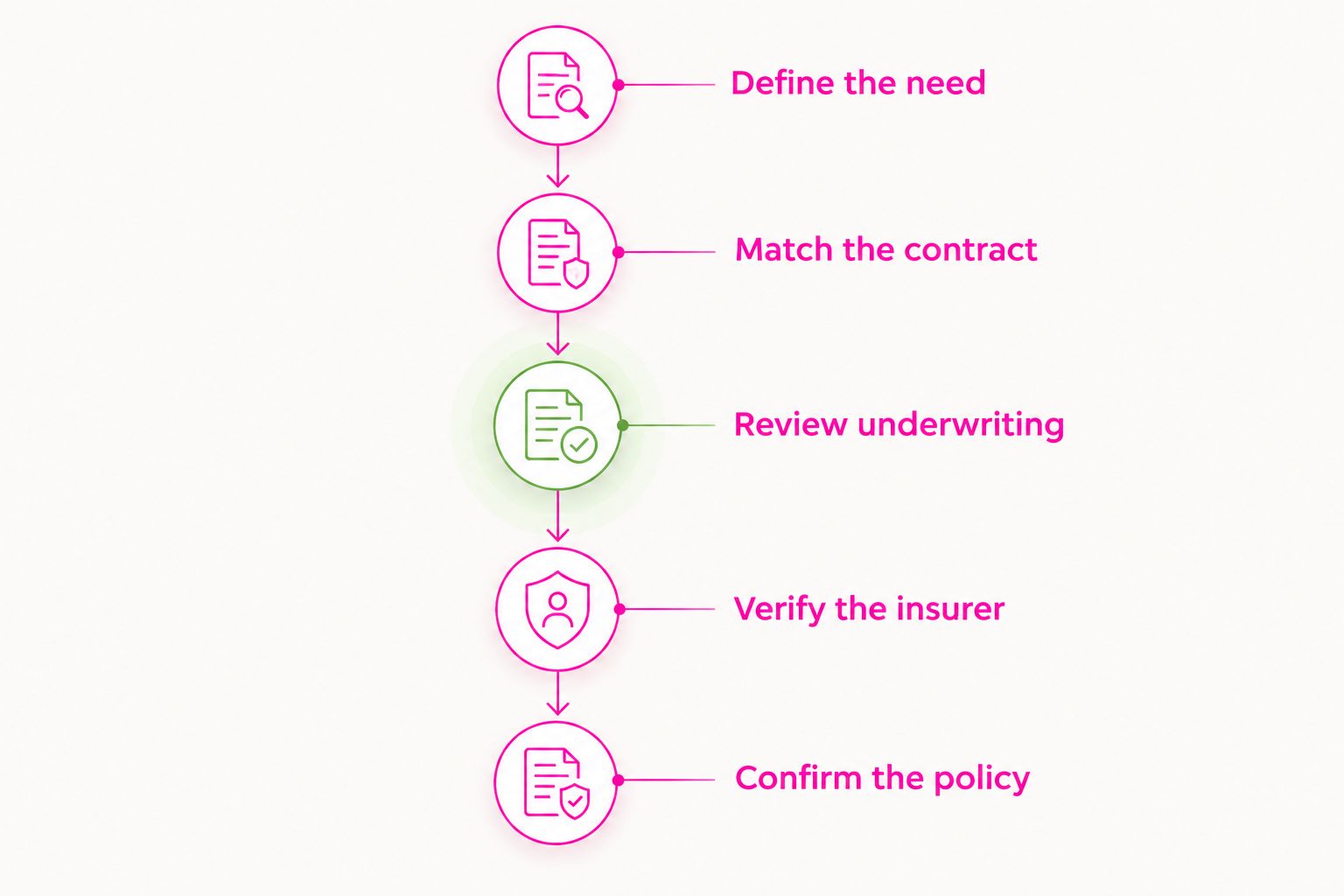
This sequence keeps a company comparison focused on your actual need. If your circumstances change during the application, update the information rather than assuming the earlier proposal still fits.
Discuss your financial protection needs
Explore life insurance within Blakeinc365's physical, mental, financial, and medical health approach.
How these options are ranked
The order prioritizes income replacement, independence from employment, and contract clarity before permanent coverage features. Individual level-term is the default for a temporary obligation; permanent insurance enters the decision when the obligation itself is permanent.
This is a suitability ranking, not a claim that every term insurer outperforms every permanent insurer. Your underwriting offer and the issued contract determine the final comparison.
Which life insurance should you choose?
Choose individual level-term first when your main goal is replacing income for a defined period. Keep useful employer coverage as a supplement. Evaluate whole life, universal life, or IUL only when a permanent need justifies the additional commitments.
Blakeinc365 brings life insurance/financial protection services into a broader health consultancy. For your 2026 decision, keep insurance's job explicit: protecting a financial obligation, not substituting for medical care or automatically solving every wealth-planning problem.
FAQ
What's the best life insurance for clinical researchers?
Individual level-term life insurance is the default starting point for clinical researchers with temporary income-replacement needs. Permanent insurance fits a different objective: an obligation that continues for life.
Which life insurance company is best for a clinical researcher?
The best company is the insurer whose issued contract and underwriting offer fit your documented need. Compare equivalent policies, state authorization, guarantees, and payment requirements rather than choosing by name recognition.
Is employer life insurance enough for a research coordinator?
Employer life insurance is enough only if its benefit and duration cover the coordinator's financial responsibilities. Check what happens when employment ends before relying on it as the sole protection.
Does clinical research work affect life insurance underwriting?
Insurers assess the information requested about your actual work and health, not just your job title. Describe duties, travel, and exposures accurately instead of assuming all clinical researchers receive the same treatment.
Is whole life better than term life for clinical professionals?
Whole life fits a lifelong obligation; term life fits a defined coverage period. Neither structure is better for every clinical professional, and cash value does not replace the need to evaluate payment commitments.
Does indexed universal life guarantee market returns?
Indexed universal life does not guarantee market returns. Its index-linked crediting follows contract rules, and an interest-crediting floor does not prevent policy charges from reducing values.
Can I keep my life insurance when I change research employers?
An individually owned policy does not end solely because you change employers. Employer group coverage follows its own continuation, portability, and conversion provisions, including any deadlines.
Does Blakeinc365 offer life insurance support for clinical professionals?
Blakeinc365 offers life insurance and financial protection services to individuals and clinical professionals. Mary Blake, MPH, also provides clinical research, public speaking, and wellness coaching services.
One last thing
A death benefit protects beneficiaries after death; disability insurance addresses a different risk—loss of earning ability while you are alive. Do not let a life insurance purchase stand in for that separate discussion.
Before signing, explain the proposed policy back in plain language: who owns it, who receives the benefit, when protection ends, and what keeps it in force. If the explanation depends on a sales illustration rather than the contract, stop and clarify.
This guide provides general education, not an individualized insurance, investment, tax, or legal recommendation.