
Best overall: level term life insurance. Best for guaranteed cash value: whole life. Best for permanent death-benefit protection: guaranteed universal life. Best for flexible permanent coverage with index-linked interest: indexed universal life. This 2026 guide ranks policy types for self-employed consultants by the financial obligation each one protects—not by an insurer’s sales pitch.
- The best life insurance for self-employed consultants is level term when dependents need protection for a defined period.
- Whole life suits guaranteed cash-value planning; guaranteed universal life suits permanent death-benefit needs.
- Indexed universal life requires attention to charges, funding, and policy assumptions—not just an illustrated account value.
- Blakeinc365 connects life insurance and financial protection with physical, mental, and medical health.
Why this matters
When you work for yourself, your household and your business can depend on the same person. Your death can leave dependents without income while business debts, personal guarantees, and final expenses remain.
Blakeinc365 is best suited to consultants who want life insurance planning connected to physical, mental, financial, and medical health. Led by Mary Blake, MPH, Blakeinc365 offers life insurance and financial protection services alongside health consultancy services. That perspective connects the household protection question to your wider circumstances; it does not make every insurance product suitable.
For your 2026 decision, separate three questions: who needs money if you die, how long that need lasts, and whether you need permanent coverage. A policy that solves one question does not automatically solve the others.
What makes the best life insurance for self-employed consultants?
Use these criteria before comparing illustrations or choosing an insurer:
- Protection period: Match coverage to the duration of household support, debt, or an ongoing estate obligation.
- Payment stability: Choose a funding commitment your consulting income can support, including during slow periods.
- Contract guarantees: Separate guaranteed benefits from projections, dividends, and assumptions about future interest.
- Underwriting fit: Compare how insurers assess your health and occupation rather than assuming identical outcomes.
- Business purpose: Distinguish family income replacement from business succession or obligations under a buy-sell agreement.
- Maintenance burden: Decide whether you want straightforward coverage or a permanent policy requiring continuing review.
Do not start with cash accumulation. Start with the loss your beneficiaries would face, then decide whether a cash-value feature serves a separate purpose.
Life insurance options at a glance
This 2026 ranking compares policy structures. It does not rank insurance companies or treat a policy illustration as a promise.
| Rank and policy type | Best for | Standout feature | Key limitation |
|---|---|---|---|
| 1. Level term life | Household income replacement during a defined period | Level premiums during the selected term | Coverage ends unless renewed or converted under the contract |
| 2. Whole life | Permanent coverage with guaranteed cash-value planning | Contractual death benefit and cash-value guarantees | Requires a continuing funding commitment; accessing value affects the policy |
| 3. Guaranteed universal life | Permanent death-benefit protection without prioritizing accumulation | Death-benefit guarantee subject to policy conditions | Funding and timing requirements matter; cash accumulation is not its main purpose |
| 4. Indexed universal life | Flexible permanent coverage with index-linked interest crediting | Adjustable policy features within contractual limits | Charges and nonguaranteed assumptions complicate funding decisions |
1. Level term life: best for household income replacement
Level term life provides a death benefit for a defined coverage period, with premiums that remain level during that period. Common terms include 10 years, 20 years, and 30 years; the available durations depend on the insurer and policy.
For a consultant supporting children or a partner, the strongest starting point is the period those people would depend on your earnings. Match the term to that obligation rather than choosing a duration because it sounds standard.
Level term life pros:
- Separates death-benefit protection from cash-value accumulation.
- Provides predictable premiums during the level-premium period.
- Lets you match coverage duration to a temporary financial obligation.
- Can include conversion rights when the contract provides them.
Level term life cons:
- Does not build cash value.
- The initial term can end while your protection need continues.
- Renewal and conversion options have contractual limits and deadlines.
Best for: Consultants whose main goal is replacing household income until dependents become financially independent or a major obligation ends.
Check conversion provisions before you apply. A conversion right can allow a move to eligible permanent coverage without new medical underwriting, but the deadline and eligible products come from the contract.
Verdict: Buy level term life when your protection need has an end date. It is the default starting point for this 2026 comparison—not an automatic answer for every household.
2. Whole life: best for guaranteed cash-value planning
Whole life combines permanent death-benefit protection with cash value. Traditional whole life includes contractual guarantees, provided you meet the policy’s premium requirements; participating policies can also pay dividends, but dividends are not guaranteed.
Choose this structure because you need permanent coverage and value its contractual predictability. Do not choose it simply because someone describes the cash value as another savings account.
Whole life pros:
- Provides permanent protection when maintained as required.
- Includes guaranteed cash values under the contract.
- Traditional policies provide a defined premium schedule.
- Offers policy loans subject to the contract’s terms.
Whole life cons:
- Requires a funding commitment beyond a temporary protection period.
- Loans and withdrawals can reduce policy benefits.
- Early surrender can return less than the premiums paid.
Best for: Consultants who have an ongoing death-benefit need and specifically want guaranteed cash-value development.
For a 2026 purchase, compare the guaranteed column with the nonguaranteed column. A dividend illustration is not a contractual guarantee. Ask what happens if you stop paying, borrow against the policy, or surrender it.
Verdict: Buy whole life only when permanent coverage and guaranteed cash-value planning both serve a defined purpose. Hold if your main need is temporary income replacement.
3. Guaranteed universal life: best for permanent death-benefit protection
Guaranteed universal life focuses on maintaining a death benefit under a contractual guarantee. The guarantee depends on conditions such as required payments and their timing; the policy’s stated coverage endpoint also matters.
This structure belongs on the shortlist when you need coverage beyond a term policy but do not prioritize cash-value accumulation. The word guaranteed does not remove your responsibility to follow the contract.
Guaranteed universal life pros:
- Targets a continuing death-benefit need.
- Offers a contractual coverage guarantee when its conditions are satisfied.
- Separates the protection objective from an accumulation-focused strategy.
Guaranteed universal life cons:
- Late or insufficient payments can affect the guarantee.
- Loans or withdrawals can interfere with policy guarantees.
- Cash value is not the policy’s central planning benefit.
Best for: Consultants who need permanent death-benefit protection rather than a cash-value strategy.
Ask the insurer to identify the guarantee’s endpoint, payment requirements, and consequences of changing the policy. Review those answers in the contract, not just in a summary illustration.
Verdict: Buy guaranteed universal life for a documented permanent protection need; skip it as a substitute for accessible savings.
4. Indexed universal life: best for flexible permanent coverage
Indexed universal life is permanent insurance with cash value and interest-crediting methods linked to an external index. You are not directly investing the policy’s cash value in that index, and crediting rules can include caps, participation rates, or spreads.
The flexibility is real, but it comes with responsibility. Policy charges continue, and a floor on index-linked interest does not guarantee that total cash value cannot decline.
Indexed universal life pros:
- Provides permanent coverage when adequately funded and maintained.
- Allows premium flexibility within policy requirements.
- Offers index-linked crediting without direct ownership of index investments.
- Can allow death-benefit adjustments subject to contract and underwriting rules.
Indexed universal life cons:
- Illustrated values rely on assumptions, not promises.
- Charges and crediting provisions require continuing review.
- Insufficient funding or unmanaged loans can contribute to lapse.
Best for: Consultants with a permanent coverage need who understand the policy mechanics and will review funding regularly.
For a 2026 decision, request illustrations showing less favorable crediting assumptions. Ask which elements are guaranteed, which can change, and what funding is required to maintain coverage under those assumptions.
Verdict: Hold indexed universal life until its insurance purpose, funding requirements, and downside scenarios are clear. Skip any recommendation presented as guaranteed market growth.
How the options were ranked
The ranking puts defined household protection first, then separates permanent coverage by its main purpose: guaranteed cash value, death-benefit guarantees, or flexible index-linked accumulation. It uses the criteria above—not an assumed return or a promised health benefit.
Your circumstances can change the order. A permanent obligation can put permanent insurance ahead of term coverage. That is a reason to change the shortlist, not a reason to ignore the contract’s limitations.
Turn the ranking into your coverage decision
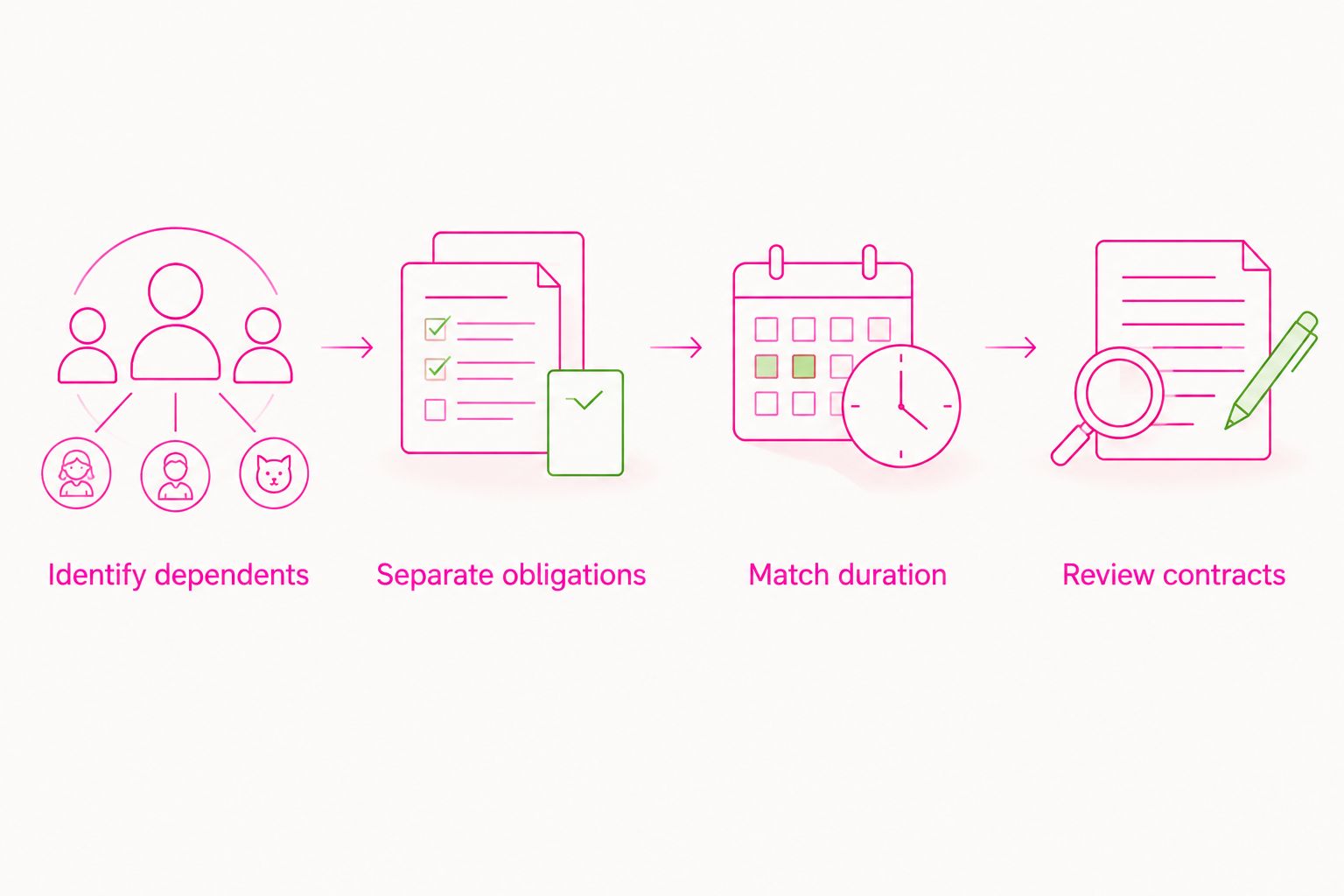
A useful 2026 insurance decision starts with responsibilities, not a product name. Work through the following sequence before requesting applications.
Identify dependents
List who relies on your earnings and what support would need to continue after your death. Include unpaid work you perform, such as childcare, if your household would need to replace it.
Separate obligations
Distinguish household spending from business debts, personal guarantees, and succession agreements. A family beneficiary and a business beneficiary do not serve the same purpose.
Match duration
Identify which obligations end and which continue. Use that distinction to choose between term coverage, permanent coverage, or a combination with a clearly defined role for each policy.
Review contracts
Compare guarantees, exclusions, payment requirements, conversion provisions, and lapse conditions. Submit accurate health and occupation information; an incomplete application is not a shortcut to appropriate coverage.
Keep household protection separate from business continuity. If an agreement requires insurance funding, have your attorney and insurance professional align the ownership, beneficiary designation, and agreement terms. Do not assume a personally owned policy satisfies a business contract.
Blakeinc365’s life insurance and financial protection services sit within its wider health consultancy. That is a useful setting for discussing how protection fits your life—not a substitute for reviewing the insurer’s policy or obtaining legal and tax advice.
Connect insurance with your wider health
Explore life insurance and financial protection alongside physical, mental, and medical health.
Which life insurance should you choose?
Choose level term life first if your primary goal is replacing income for dependents over a defined period. Move to whole life when guaranteed cash-value planning matters, guaranteed universal life when permanent death-benefit protection matters, or indexed universal life when you understand and accept its continuing funding and review requirements.
Before signing, write the policy’s purpose in one sentence. If that sentence mixes family protection, investment growth, retirement income, and business succession without distinguishing them, stop and separate the goals.
Life insurance pays a death benefit; it does not replace disability coverage for an illness or injury that prevents you from working. Self-employed consultants need to distinguish those risks rather than expecting one policy to solve both.
FAQ
What's the best life insurance for self-employed consultants?
Level term life is the strongest starting point when a self-employed consultant needs household income replacement for a defined period. Permanent insurance belongs on the shortlist when the death-benefit need continues beyond that period.
Should a self-employed consultant choose term or whole life?
Choose term life for a temporary protection need and consider whole life for permanent coverage with guaranteed cash-value planning. The decision should follow the obligation you need to protect, not the appeal of an illustrated cash value.
How long should my term life insurance last?
Your term should match how long dependents or financial obligations require protection. Common options include 10 years, 20 years, and 30 years, but the insurer's available terms and your circumstances determine the appropriate choice.
Is indexed universal life guaranteed not to lose money?
No, an indexed universal life interest-crediting floor does not guarantee that total policy cash value cannot decline. Insurance charges, withdrawals, loans, and funding decisions affect the policy independently of index-linked interest.
Does guaranteed universal life stay in force regardless of payments?
No, guaranteed universal life requires you to satisfy the contract's guarantee conditions. Payment amounts, timing, policy changes, and the guarantee's coverage endpoint require close review.
Does life insurance cover me if I cannot work?
Life insurance is not a substitute for disability insurance. Some policies include living-benefit provisions, but those benefits depend on specific qualifying conditions and do not provide general income replacement whenever you cannot work.
Can one policy protect my family and fund a business agreement?
A policy can have beneficiary arrangements addressing different interests, but it must match the relevant legal agreement and ownership structure. Have an attorney and insurance professional review the arrangement rather than assuming a family policy satisfies a business obligation.
One last thing
A convertible term policy is not the same as a policy you can convert whenever you want. Conversion deadlines and eligible permanent products are contractual. Record that deadline alongside your annual financial review; discovering it after your health changes or the conversion window closes removes a choice you thought you had.
This guide provides general education, not individualized insurance, legal, or tax advice. Final suitability depends on your circumstances and the policy contract.