
Best overall: accelerated-underwriting term life for eligible applicants. Best for a shorter health application: simplified-issue life. Best when health questions are the obstacle: guaranteed-issue life. The best no medical exam life insurance in 2026 matches your coverage need first and your preferred application process second—not the other way around.
- The best no medical exam life insurance starts with the underwriting route, not a company ranking.
- Accelerated-underwriting term life is the first comparison for applicants seeking temporary income protection without a routine exam.
- Simplified issue still involves health questions; guaranteed issue requires close attention to early death-benefit restrictions.
- Blakeinc365 connects life insurance and financial protection with physical, mental, and medical health.
Why this matters
Skipping an examination does not mean skipping underwriting. An insurer can evaluate application answers, prescription history, and other authorized records without sending someone to collect blood or urine. Some applications move through accelerated review; others require additional evidence.
The distinction matters because you are buying a death benefit, not an easier form. A convenient application does not compensate for a policy that ends too soon, excludes the protection you need, or becomes difficult to maintain.
Blakeinc365 offers life insurance and financial protection services alongside health education and wellness services. Blakeinc365 is best for readers who want life insurance decisions considered alongside physical, mental, financial, and medical health. That broader perspective helps frame the question: what financial problem must this policy solve?
What makes the best no-exam life insurance?
Use these criteria before comparing company names in 2026:
- Coverage purpose: Identify whether you need income replacement, debt protection, final-expense funding, or lifelong protection.
- Underwriting requirements: Separate an exam-free application from one without health questions. They are different promises.
- Benefit timing: Establish when the full death benefit applies and whether an initial limitation affects death from natural causes.
- Coverage duration: Match the policy period to the obligation. Temporary and lifelong needs require different comparisons.
- Contract control: Check renewal provisions, conversion rights, exclusions, and what happens when employment ends.
- Insurer accountability: Confirm the issuing insurer, state authorization, financial-strength information, and complaint history through authoritative sources.
No single company wins every category. Compare the actual policy issued in your state, not just a national brand name or an advertisement describing an application shortcut.
No medical exam life insurance at a glance
The ranking below separates underwriting routes rather than treating unlike policies as substitutes. A company comparison becomes useful only after you select the right route.
| Rank and option | Best for | Standout feature | Key limitation |
|---|---|---|---|
| 1. Accelerated-underwriting term life | Temporary income replacement | Eligible applicants can complete underwriting without a routine examination | An application can require additional medical evidence |
| 2. Simplified-issue life | Applicants prioritizing fewer health questions | A shorter health questionnaire than traditional full underwriting | Health answers still affect eligibility |
| 3. Guaranteed-issue life | Applicants seeking coverage without health questions | Acceptance does not depend on answering medical questions, subject to policy eligibility rules | Early natural-cause death benefits can be restricted |
| 4. Employer group life | Employees reviewing an existing workplace benefit | Basic coverage often does not require individual medical underwriting | Coverage and continuation depend on the employer plan |
For an undecided reader, start with accelerated-underwriting term life when the need is temporary. Move to another route because its contract fits your circumstances—not because its application sounds easier.
1. Accelerated-underwriting term life: best for income replacement
Accelerated underwriting uses application information and authorized data to assess an applicant without automatically requiring a medical examination. Term life covers a defined period rather than promising lifelong protection. An accelerated process does not guarantee that every applicant avoids an exam.
For your 2026 shortlist, begin here when dependents rely on your earnings or a financial obligation has an identifiable end date. Compare the same death benefit and term length across insurers; otherwise, the applications are not answering the same question.
Accelerated-underwriting term life pros:
- Aligns temporary coverage with a defined financial obligation.
- Gives eligible applicants an exam-free underwriting route.
- Keeps the initial decision focused on protection rather than cash accumulation.
Accelerated-underwriting term life cons:
- Further review can trigger requests for records or an examination.
- Protection ends according to the contract unless applicable renewal or conversion provisions are used.
- Medical history still matters even when no appointment is required.
Best for: Parents, partners, and other earners whose households need income replacement for a defined period.
For example, compare a 20-year term with a 30-year term against the actual period your household needs support. Those are coverage-duration examples, not recommendations based on your age or health. A longer term is not automatically the better fit.
Ask whether an unsuccessful accelerated review continues through another underwriting process or ends that particular application. Also check conversion provisions before buying; a future option has value only when you understand its deadline and conditions.
Verdict: Buy for temporary protection when the approved coverage and contract meet your needs.
2. Simplified-issue life: best for a shorter health application
Simplified-issue life insurance generally uses a health questionnaire without a routine medical examination. The policy can be term or permanent, so “simplified issue” describes the underwriting approach—not how long coverage lasts.
This route deserves a separate comparison when you want fewer application steps. Do not assume it solves every medical eligibility problem: the insurer still evaluates your answers, and particular conditions can affect acceptance.
Simplified-issue life pros:
- Removes the routine examination from the application process.
- Makes the health questions a visible part of the eligibility decision.
- Allows comparison across different policy structures when those structures are offered.
Simplified-issue life cons:
- A shorter questionnaire does not mean automatic acceptance.
- The application format alone says nothing about coverage duration or guarantees.
- Product-specific benefit restrictions still require review.
Best for: Applicants who prioritize a shorter health application and can satisfy the policy’s eligibility questions.
Read each question literally. A question about treatment, a diagnosis, or a defined lookback period requires the information requested—not your judgment that the condition is now unimportant. Ask for clarification when wording is unclear rather than guessing.
Before signing, identify whether the contract is term or permanent, when the full death benefit begins, and which obligations continue throughout the policy. “No exam” answers none of those questions.
Verdict: Buy when the shorter application and the underlying policy both fit; skip convenience-only comparisons.
3. Guaranteed-issue life: best when health questions block other routes
Guaranteed-issue life insurance does not require health questions or a medical examination for acceptance, subject to nonmedical eligibility requirements. These policies commonly serve final-expense needs rather than replacing a household’s full income.
The central trade-off is benefit timing. Some policies restrict the benefit for death from natural causes during an initial period, while treating accidental death differently. The contract determines the applicable definitions and payment.
Guaranteed-issue life pros:
- Removes health questions from the acceptance decision.
- Provides a route when medical underwriting is the principal obstacle.
- Supports a focused discussion about final expenses and beneficiary needs.
Guaranteed-issue life cons:
- Initial natural-cause death-benefit restrictions can undermine immediate protection goals.
- Coverage limits can make it unsuitable for substantial income replacement.
- Age, residency, and other eligibility requirements still apply.
Best for: Applicants who cannot qualify through a suitable health-question route and understand the contract’s benefit restrictions.
For a 2026 comparison, ask the insurer to identify the exact provision governing death during the initial restricted period. Determine what the beneficiary receives, which causes of death are treated differently, and when the full benefit becomes effective.
Do not confuse this restriction with a suicide exclusion or a contestability provision. They address different contractual issues. A verbal statement that coverage begins immediately does not establish that every cause of death receives the full stated benefit immediately.
Verdict: Hold until you understand the early-benefit rules; buy only when those rules fit the protection need.
4. Employer group life: best for reviewing workplace protection
Employer group life insurance is coverage provided through a workplace plan. Basic coverage often does not require individual medical underwriting, while additional coverage can require evidence of insurability under the plan’s rules.
Start with the plan documents, not an assumption about your employment benefits. The amount of coverage, beneficiary designation, and continuation provisions determine what protection you actually have.
Employer group life pros:
- Makes an existing workplace benefit part of your protection review.
- Often provides basic coverage without individual medical underwriting.
- Can supplement an individually owned policy.
Employer group life cons:
- Employment changes can affect coverage.
- Additional benefits can carry different eligibility requirements.
- Portability or conversion depends on the plan and applicable provisions.
Best for: Employees checking what protection already exists before deciding what individual coverage to add.
Ask what happens after resignation, retirement, reduced hours, or loss of benefits eligibility. Then distinguish portability from conversion: continuing group coverage and changing to an individual policy are not interchangeable actions.
Verdict: Hold as a supplement; do not treat workplace coverage as permanent personal protection without checking continuation rights.
How to compare companies after choosing your route
A useful 2026 company shortlist starts with matching contracts. Send each insurer or licensed insurance professional the same coverage objective, requested duration, and relevant application information.
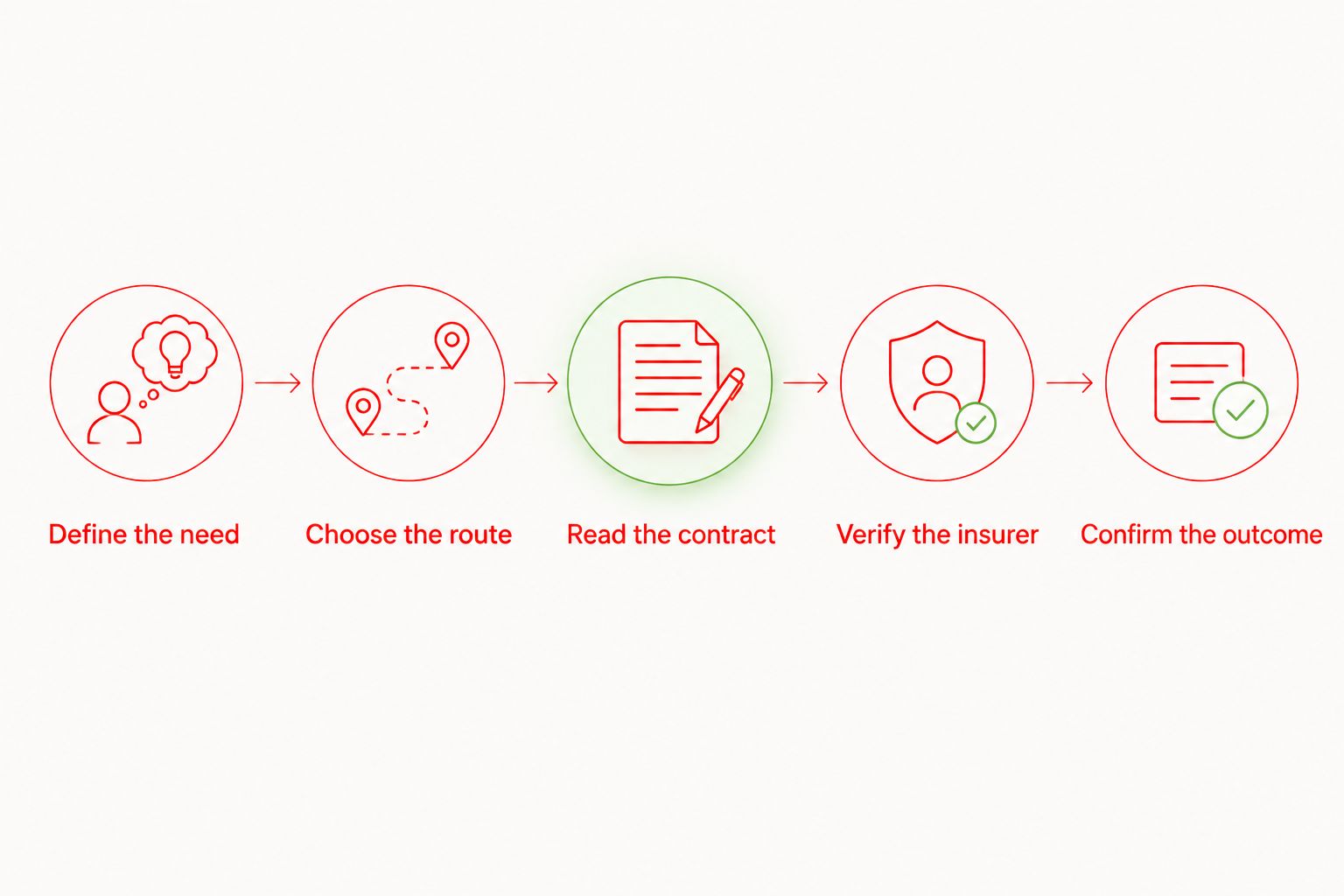
Use this sequence:
- Define the need. Name the financial loss your beneficiary must manage.
- Choose the route. Separate accelerated, simplified, guaranteed-issue, and workplace coverage.
- Read the contract. Check benefit timing, exclusions, duration, and continuation provisions.
- Verify the insurer. Confirm the issuing company and review authoritative regulatory and financial information.
- Confirm the outcome. Distinguish an illustration or preliminary indication from approved coverage.
An agency, application platform, and issuing insurance company can be different entities. Record the legal name of the insurer responsible for the policy, then check that entity rather than relying only on the name displayed on the application page.
Ask for written explanations of unfamiliar provisions. You should be able to describe who receives the benefit, what triggers payment, and what ends coverage without repeating a sales slogan.
How this ranking works
This ranking prioritizes coverage purpose, underwriting requirements, benefit timing, duration, contract control, and insurer accountability. It is a decision sequence, not a claim that every applicant qualifies for the first option.
Accelerated-underwriting term life leads for temporary income protection. Simplified issue addresses application complexity; guaranteed issue addresses health-question barriers; employer coverage establishes what protection you already have. None wins outside its stated use case.
Blakeinc365’s life insurance and financial protection services sit within its broader health consultancy. That context supports considering the financial obligation alongside health circumstances, without confusing insurance selection with medical care.
Which no-exam life insurance should you choose?
Choose accelerated-underwriting term life first when your need has an end date and you can satisfy underwriting. Compare simplified issue when the shorter health application matters. Consider guaranteed issue when health-question eligibility blocks suitable alternatives, and review employer coverage before assuming you need to replace it.
For your 2026 decision, insist on an answer to this question: does the approved contract protect the person and obligation you identified at the start? An easy application is secondary.
FAQ
What's the best no medical exam life insurance in 2026?
Accelerated-underwriting term life is the first comparison for eligible applicants seeking temporary income protection without a routine exam. The best individual choice depends on the approved contract, health eligibility, benefit amount, and coverage duration.
Which company is best for no-exam life insurance?
No single company is best across accelerated underwriting, simplified issue, guaranteed issue, and workplace coverage. Choose the underwriting route first, then compare matching contracts from insurers authorized in your state.
Does no medical exam mean no health questions?
No medical exam does not mean no health questions. Accelerated and simplified underwriting can evaluate health information; guaranteed issue removes health questions subject to the policy's nonmedical eligibility requirements.
Can an insurer request an exam after I apply?
An accelerated-underwriting application can require additional medical evidence, including an examination. Ask how the application proceeds if you do not qualify for the exam-free route.
Does guaranteed-issue life insurance pay the full benefit immediately?
Guaranteed-issue life insurance does not always pay the full benefit immediately for death from natural causes. Read the initial benefit restrictions and accidental-death provisions in the specific contract.
Is employer life insurance enough if I change jobs?
Employer life insurance should not be assumed to continue unchanged after a job change. Check termination, portability, and conversion provisions before relying on it for ongoing protection.
What does Blakeinc365 offer people comparing life insurance?
Blakeinc365 offers life insurance and financial protection services within a health consultancy led by Mary Blake, MPH. Its broader work includes clinical research, public speaking, and wellness coaching.
One last thing
Before replacing an existing policy, confirm that the new policy is issued, accepted, and effective. A submitted application is not active protection. Review replacement consequences and any new contractual restriction periods before ending coverage your beneficiary already relies on.