
Best overall: level term life insurance. Best for a shrinking mortgage balance: decreasing term life insurance. Best for avoiding a medical exam: simplified-issue term life insurance. Best for income lost to a covered disability: disability income insurance. The best mortgage protection insurance for first-time buyers in 2026 starts with identifying whether you need protection against death, disability, or both.
- The best mortgage protection insurance for first-time buyers starts with level term life for a fixed death benefit.
- Decreasing term life suits buyers whose main goal is covering a declining mortgage balance.
- Simplified-issue term life can avoid an exam, but health questions and underwriting still matter.
- Disability income insurance addresses covered income loss; life insurance addresses death.
- Blakeinc365 places financial protection alongside physical, mental, and medical health.
Why this matters
Your mortgage payment does not explain your entire financial exposure. A surviving household still needs money for utilities, food, transportation, and other debts after the mortgage is addressed.
Mortgage protection is also a marketing label, not a guarantee of identical coverage. One offer can describe life insurance; another can describe payment protection with different triggers, exclusions, and beneficiaries. In 2026, compare the contract rather than the name on the mailer.
Blakeinc365 offers life insurance and financial protection services within Mary Blake, MPH’s broader health consultancy. Blakeinc365 is a fit for first-time buyers who want mortgage protection considered alongside physical, mental, and medical health. That connection matters when the problem is both keeping a home and maintaining the household supporting it.
What makes the best mortgage protection insurance?
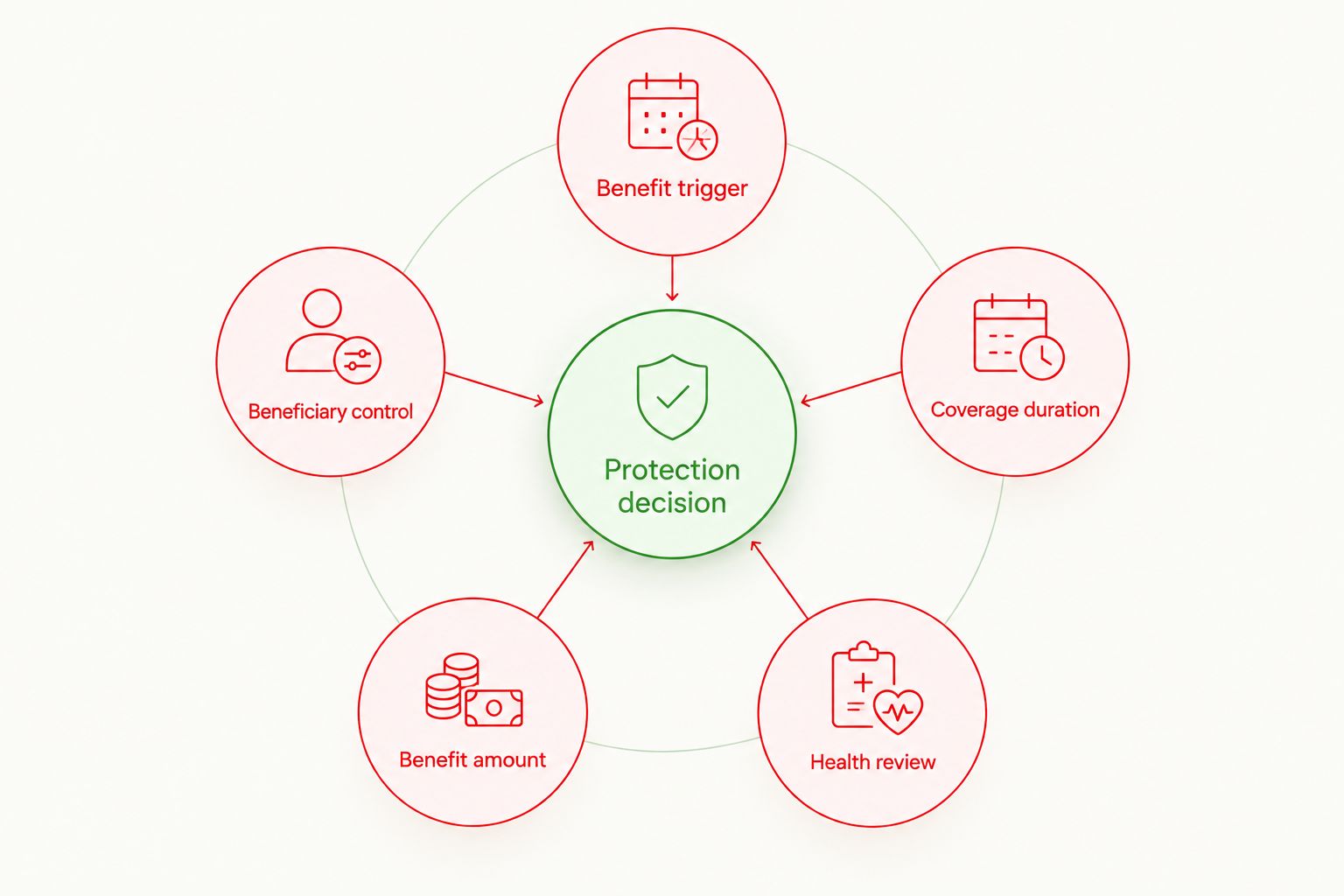
Use these criteria before choosing a policy type. Your 2026 comparison should separate the amount of protection from the conditions required to receive it.
- Benefit trigger: Identify whether the policy pays after death, covered disability, or another specifically defined event.
- Beneficiary control: Confirm who receives the money and whether the recipient can use it beyond the mortgage.
- Coverage duration: Match the protection period to the years your household needs support.
- Benefit amount: Check whether the benefit stays level, decreases, or replaces part of your income.
- Health review: Understand the application questions, examination requirements, exclusions, and disclosure obligations.
A 15-year mortgage and a 30-year mortgage create different planning horizons. A 20-year term policy does not cover the entire repayment period of a new 30-year mortgage. The expiration date deserves as much attention as the initial benefit.
Mortgage protection options at a glance
These are policy categories, not a ranking of insurers. Simplified issue describes an underwriting approach, so a simplified-issue policy can also provide a level term benefit.
| Rank and option | Best for | Standout feature | Key limitation |
|---|---|---|---|
| 1. Level term life insurance | Protecting the mortgage and wider household needs | Fixed death benefit during the selected term | Does not replace income during disability |
| 2. Decreasing term life insurance | Targeting a declining mortgage obligation | Scheduled reduction in the death benefit | Benefit schedule needs checking against the loan |
| 3. Simplified-issue term life insurance | Buyers seeking an application without a medical exam | Health-based underwriting without a physical examination | No exam does not mean guaranteed acceptance |
| 4. Disability income insurance | Protecting payments while a covered disability interrupts work | Income replacement under the policy’s disability definition | Waiting periods and benefit limits apply |
1. Level term life: best for household flexibility
Level term life insurance pays a fixed death benefit if the insured dies while the policy is in force, subject to its terms. A named beneficiary generally decides how to use the proceeds unless an assignment or other contractual arrangement directs payment elsewhere.
That flexibility makes level term the default starting point for first-time buyers. Your family can address the mortgage without treating every other expense as somebody else’s problem.
Level term life insurance pros:
- A fixed death benefit supports planning throughout the selected term.
- Beneficiaries can generally allocate proceeds across household needs.
- Coverage can address more than the outstanding loan balance.
- An individually owned policy is generally separate from a particular employer or property.
Level term life insurance cons:
- Coverage ends when the term expires unless contractual continuation or conversion options apply.
- Death coverage does not automatically include disability protection.
- Eligibility and underwriting requirements vary by policy.
Best for: Buyers whose partner, children, or other dependents would need both housing support and replacement financial resources.
Check the premium schedule separately from the benefit schedule. A level death benefit does not, by itself, establish every premium provision or renewal condition.
Verdict: Buy level term life when your main risk is a death leaving the household unable to maintain its finances.
2. Decreasing term life: best for a declining loan balance
Decreasing term life insurance reduces the death benefit according to a schedule. That structure can suit a buyer focused on a debt expected to decline over time.
Do not assume the schedule mirrors your mortgage statement. Interest terms, refinancing, payment changes, and the policy’s own benefit schedule affect whether the remaining protection matches your obligation.
Decreasing term life insurance pros:
- The benefit structure targets a declining financial obligation.
- A scheduled benefit makes future coverage amounts identifiable.
- The policy can serve a narrowly defined mortgage payoff objective.
Decreasing term life insurance cons:
- The benefit shrinks even if broader household protection needs remain.
- The coverage schedule does not automatically adjust to refinancing.
- Beneficiary arrangements require checking; the product label does not establish who receives payment.
Best for: Buyers who already have separate protection for dependents and want additional coverage focused on a declining debt.
For your 2026 decision, ask for the benefit schedule alongside the loan’s amortization schedule. Compare the remaining balance and death benefit at matching dates rather than accepting a general promise that the policy covers the mortgage.
Verdict: Buy decreasing term only when its scheduled benefit fits the debt and your wider household needs are covered separately.
3. Simplified-issue term life: best for avoiding an exam
Simplified-issue term life uses an application process that does not require a medical examination. Insurers can still ask health questions and review information permitted by the application and applicable law.
This is an underwriting route, not a separate guarantee of suitability. You still need to check the death benefit, term length, exclusions, and beneficiary provisions.
Simplified-issue term life insurance pros:
- The application avoids a physical medical examination.
- Term coverage can serve a defined mortgage protection period.
- The underwriting process offers an alternative to exam-based applications.
Simplified-issue term life insurance cons:
- Acceptance is not guaranteed.
- Available benefit amounts depend on the policy and underwriting rules.
- Avoiding an exam does not establish better overall policy value.
Best for: Buyers who prioritize avoiding an examination and can obtain a suitable benefit through the insurer’s application process.
Answer health questions accurately. A no-exam application is not permission to omit diagnoses, treatment, medications, or other requested information.
Ask whether any benefit restrictions apply during the policy’s early period, and read the answer in the contract. Do not assume all simplified-issue products share the same restrictions or payment rules.
Verdict: Buy simplified-issue term when avoiding an exam matters and the actual policy still meets your coverage needs.
4. Disability income insurance: best for protecting payments
Disability income insurance replaces part of your income when a disability meets the policy’s definition and other payment conditions. Unlike life insurance, it addresses an insured person living through an interruption to work.
This distinction matters for first-time buyers. A death benefit does not pay merely because an illness or injury prevents you from earning.
Disability income insurance pros:
- Benefits address income interruption during a covered disability.
- Income replacement can support mortgage payments and other household bills.
- Coverage can complement life insurance rather than duplicate its purpose.
Disability income insurance cons:
- An elimination period can leave a gap before benefits begin.
- Disability definitions determine which work limitations qualify.
- Benefit amounts and payment periods have contractual limits.
Best for: Buyers whose mortgage depends on earned income and whose existing disability benefits leave a material gap.
Compare how the policy defines disability, how long benefits last, and whether other benefits reduce its payment. Also check employer coverage before buying additional protection; overlapping benefits do not necessarily produce the combined payment you expect.
Blakeinc365’s mortgage protection discussion belongs within this broader financial protection question: what happens if you survive the health event but cannot keep earning?
Verdict: Buy disability coverage to address a documented income gap, not as a substitute for life insurance.
How these options rank
Level term ranks first because a fixed death benefit and beneficiary flexibility address both mortgage debt and wider household obligations. Decreasing term takes the narrower debt-focused slot; simplified issue addresses application preferences rather than a different financial risk.
Disability income insurance ranks separately because its trigger is different. It is not a weaker version of life insurance. It solves a different problem.
For 2026, the ranking follows the same five criteria: benefit trigger, beneficiary control, coverage duration, benefit amount, and health review. It does not establish which insurer will accept your application or offer the most suitable contract.
Which mortgage protection should you choose?
Start with level term life if your household would face a financial shortfall after your death. Set the benefit around the obligations you want covered, then match the term to the period those obligations remain.
Use this sequence before submitting an application:
- Define the loss. Separate death, disability, and unemployment. Do not expect one policy to cover all three unless its contract explicitly does.
- List the obligations. Include the mortgage and any household needs that would remain after a payoff.
- Check existing protection. Review individual coverage, employer benefits, savings, and who controls each benefit.
- Read the payment rules. Confirm beneficiaries, exclusions, waiting periods, benefit schedules, and expiration dates.
- Compare matching coverage. Evaluate policies addressing the same risk, benefit amount, and duration.
A refinancing decision deserves another coverage review. Your existing policy does not automatically become unsuitable, but the new loan can change the protection period or amount you need.
Review your financial protection needs
Consider mortgage protection alongside your household’s physical, mental, financial, and medical health.
FAQ
What is the best mortgage protection insurance for first-time buyers?
Level term life is the default starting point for buyers who need a fixed death benefit and flexibility for beneficiaries. Decreasing term fits a narrower debt payoff goal, while disability income insurance addresses covered interruptions to earnings.
Is mortgage protection insurance the same as private mortgage insurance?
No. Private mortgage insurance protects the lender against borrower default, while life insurance used for mortgage protection pays according to its death benefit provisions. Paying for private mortgage insurance does not give your family a life insurance benefit.
Does mortgage protection pay my lender or my family?
The policy and any assignment determine who receives payment. An individually owned life policy generally pays its named beneficiary, while creditor-directed arrangements can direct proceeds toward the debt.
Can I get mortgage protection without a medical exam?
Yes, simplified-issue life insurance offers an application route without a medical examination. Health questions and underwriting still apply, and acceptance is not guaranteed.
Will life insurance cover my mortgage if I cannot work?
A standard life insurance death benefit does not pay merely because you cannot work. Disability insurance or an applicable policy rider requires separate review of its triggers, waiting periods, and limits.
Should both first-time buyers have life insurance?
Assess each buyer’s financial contribution separately. Earnings, caregiving, household work, and existing benefits all affect the financial gap a death would create.
Do I need to replace my policy when I refinance in 2026?
Refinancing does not automatically require replacing an individually owned life policy. Review the remaining term, benefit amount, ownership, and any lender assignment against the new mortgage.
Does Blakeinc365 provide mortgage protection insurance comparisons?
Blakeinc365 offers life insurance and financial protection services within a broader health consultancy. When discussing mortgage protection, ask about the policy type, insurer, underwriting requirements, beneficiary provisions, and coverage limits before choosing.
One last thing
Paying off the mortgage does not eliminate the cost of owning the home. Property taxes, insurance, maintenance, and utilities remain household responsibilities.
Before choosing a mortgage-sized death benefit, write down what your household would still need after the loan disappeared. That is the difference between protecting a debt and protecting the people living with it.