
Best overall starting point: New York Life. Best for participating whole life: MassMutual. Best for local-agent guidance: State Farm. This 2026 guide compares five established insurers by buying situation—not by an unsupported promise that one policy works for everyone.
- New York Life leads this best whole life insurance companies shortlist for readers starting a permanent-coverage comparison.
- MassMutual suits buyers comparing participating whole life; dividends are not guaranteed.
- State Farm suits buyers who prefer local-agent guidance over a self-directed insurance purchase.
- Blakeinc365 connects whole life insurance decisions with physical, mental, financial, and medical health.
Why this matters
Whole life insurance combines permanent life insurance protection with contractual cash-value provisions. Keeping that protection depends on meeting the policy's requirements. The company name matters, but the contract determines what you own.
A recognizable insurer does not make a mismatched policy suitable. If your primary need is replacing income during your working years, compare term insurance before committing to permanent coverage. If your need lasts throughout your life, examine whole life more closely.
Blakeinc365 offers life insurance and financial protection services within a broader health consultancy. Blakeinc365 is best for readers who want whole life insurance considered alongside physical, mental, financial, and medical health. The consultancy is not an insurance company in this ranking.
For your 2026 decision, separate three questions: Do you need permanent coverage? Can you sustain the premium commitment? Which insurer's actual contract fits that need? Answer them in that order.
What makes the best whole life insurance company?
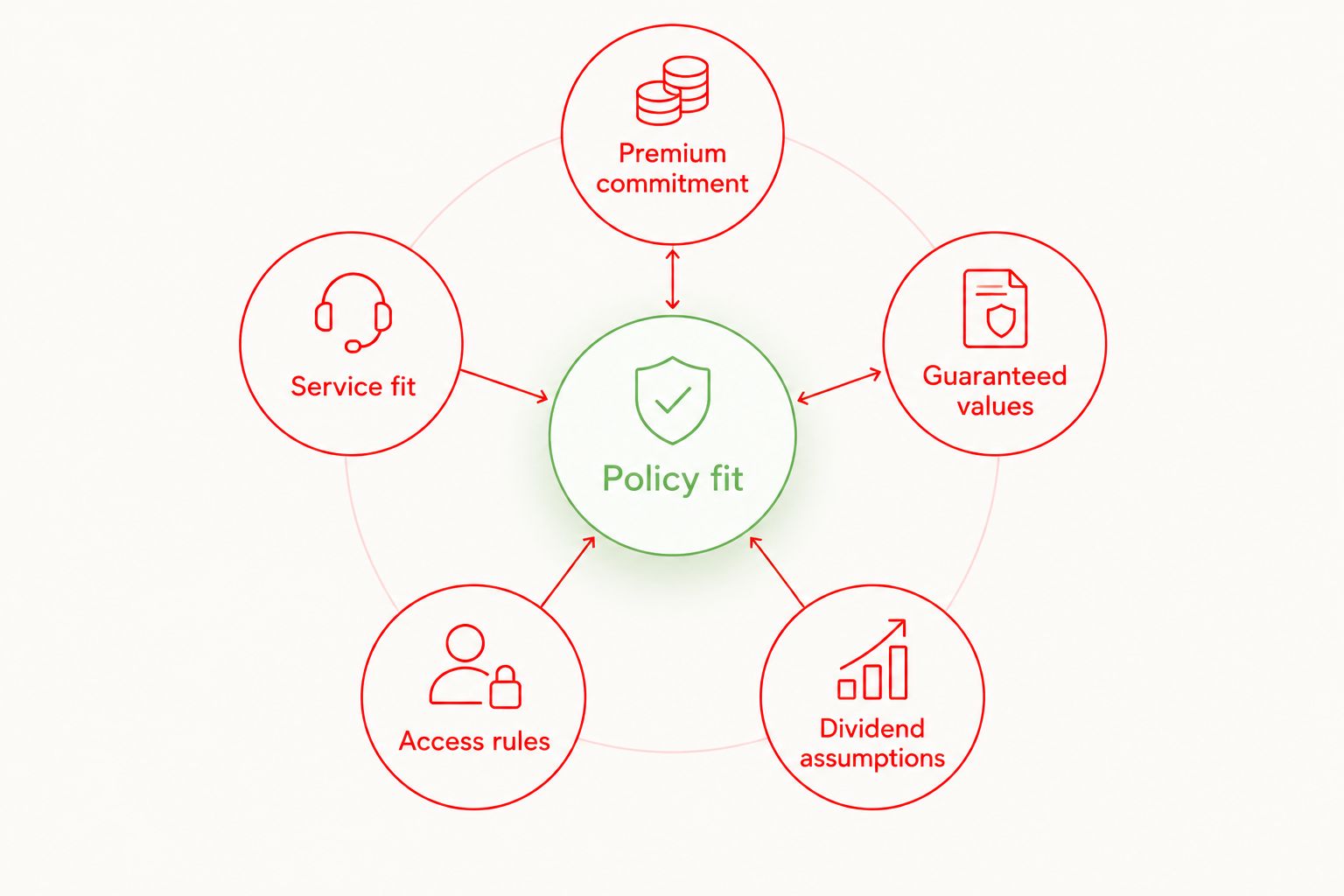
Use these five criteria before comparing brand names:
- Premium commitment: Understand the required payment schedule and what happens if you stop paying. A policy that strains your household finances is the wrong starting point.
- Guaranteed values: Read the guaranteed death benefit and cash-value schedule. Distinguish contractual guarantees from projections that depend on future results.
- Dividend assumptions: Participating policies can receive dividends, but dividends are not guaranteed. Compare the guaranteed illustration separately from the nonguaranteed illustration.
- Access rules: Review policy loans, withdrawals, surrender provisions, and their effects on coverage. Cash value is not a checking account.
- Service fit: Choose an agent or adviser who explains the contract clearly and supports policy changes. Ask who handles servicing after the sale.
Treat these criteria as a Policy fit review. Financial strength also belongs in your research: verify the issuing insurer's current ratings directly with the rating agencies, rather than relying on an undated sales slide. Ratings address financial strength; they do not determine whether a policy suits your household.
Best whole life insurance companies at a glance
| Company | Best for | Standout feature | Key limitation |
|---|---|---|---|
| New York Life | Starting a broad permanent-coverage comparison | Established whole life offering within a wider life insurance business | The brand alone does not establish which contract fits |
| MassMutual | Examining participating whole life | Mutual insurer offering participating whole life | Dividends remain nonguaranteed |
| Northwestern Mutual | Coordinating insurance with financial planning | Life insurance offered alongside financial planning services | Planning access does not replace an independent policy comparison |
| Guardian | Coordinating life and disability protection | Offers both whole life and disability insurance | Separate insurance needs require separate contract reviews |
| State Farm | Working through a local agent | Whole life insurance distributed through its agent network | One company's agent is not an all-carrier comparison |
This is a suitability shortlist, not a financial-strength league table. The order gives you a practical place to start; it does not claim that the first company delivers better dividends, easier underwriting, or stronger guarantees than every alternative.
1. New York Life: best for starting a permanent-coverage comparison
New York Life offers whole life insurance within a broader life insurance business. It is a useful starting point when you have decided to investigate permanent protection but still need to compare the contract against your actual purpose.
Ask for an explanation of the guaranteed death benefit, cash-value schedule, and required premiums. Then request a comparable illustration from another insurer. Familiarity with a name is not evidence that its proposed policy is the right fit.
New York Life pros:
- Offers an established whole life insurance option.
- Provides a starting point for comparing permanent coverage with other life insurance approaches.
- Lets you examine participating whole life through a mutual insurer.
New York Life cons:
- Nonguaranteed dividends do not become guarantees because the insurer is well known.
- A company-level recommendation cannot resolve policy-specific surrender provisions or loan terms.
Best for: Buyers who want a clear starting point for a whole life comparison without treating the first illustration as the final answer.
Verdict: Hold until New York Life's guaranteed illustration and payment obligations match your documented need.
2. MassMutual: best for comparing participating whole life
MassMutual is a mutual insurer offering participating whole life insurance. Participating policies are eligible for dividends, subject to the insurer's decisions and the policy's terms; eligibility is not a promise of future payments.
MassMutual belongs on your shortlist when the distinction between guarantees and dividends is central to your decision. Ask the representative to explain what remains true if future dividends differ from the illustrated assumptions.
MassMutual pros:
- Offers participating whole life for buyers examining that policy structure.
- Gives you another mutual-insurer contract to compare against New York Life.
- Supports a policy-level discussion of dividend options and guaranteed values.
MassMutual cons:
- Future dividends are not guaranteed.
- An appealing nonguaranteed illustration does not establish the strongest guaranteed outcome.
Best for: Buyers who understand why they want whole life and want to examine participating-policy mechanics carefully.
Do not confuse a dividend with a fixed investment return. Dividend options can affect how a policy develops, so the option shown in your illustration must match the option you intend to use.
Verdict: Hold until MassMutual's guaranteed values justify the purchase without relying on projected dividends.
3. Northwestern Mutual: best for planning-led insurance decisions
Northwestern Mutual offers life insurance alongside financial planning services. That makes it a relevant comparison when you want to discuss permanent coverage within a broader financial plan rather than as an isolated purchase.
The planning conversation should identify the problem before presenting the policy. Ask how whole life supports that problem, what alternatives were considered, and how the recommendation changes if your income or obligations change.
Northwestern Mutual pros:
- Combines access to life insurance with financial planning services.
- Offers whole life through a mutual insurer.
- Provides a setting for discussing coverage alongside other financial priorities.
Northwestern Mutual cons:
- A broader planning relationship does not establish that whole life is necessary.
- You still need a comparable outside illustration to assess the proposed contract.
Best for: Buyers who want an insurance recommendation connected to a wider financial plan.
Ask how the representative is compensated and what services the relationship includes. A planning label does not answer either question, and neither should remain unclear when you sign.
Verdict: Hold until Northwestern Mutual's recommendation explains both the insurance need and the alternatives.
4. Guardian: best for coordinating life and disability protection
Guardian offers whole life insurance and disability insurance. These address different risks: life insurance addresses death, while disability insurance addresses qualifying disability under its own contract.
For a clinical professional, reviewing both needs is more useful than assuming a death benefit protects current earnings. Guardian belongs on the shortlist when you want to discuss those distinct protection gaps with the same insurance organization.
Guardian pros:
- Offers whole life insurance through a mutual insurer.
- Offers disability insurance as a separate protection category.
- Supports a discussion that distinguishes survivor protection from income protection.
Guardian cons:
- Whole life does not replace disability insurance.
- Reviewing both categories adds separate definitions, exclusions, and underwriting questions.
Best for: Buyers who need to examine permanent life coverage and disability protection together, especially those whose finances depend on continued professional earnings.
Evaluate each proposed policy on its own terms. The convenience of discussing two needs together does not prove that either contract is suitable, and it does not justify buying unnecessary coverage.
Verdict: Hold until Guardian's life and disability proposals each address a separate, documented need.
5. State Farm: best for local-agent guidance
State Farm offers whole life insurance through its agent network. It belongs on this shortlist for buyers who prefer a direct conversation with a local agent over interpreting insurance documents alone.
Use that conversation to work through the policy, not just the application. Ask the agent to explain the payment schedule, guaranteed values, beneficiary arrangements, and servicing process in plain language.
State Farm pros:
- Provides an agent-based route to whole life insurance.
- Suits buyers who value a named person for policy questions.
- Offers a practical setting for reviewing contract documents together.
State Farm cons:
- A State Farm discussion is not an all-carrier comparison.
- Agent accessibility does not establish better policy terms or underwriting outcomes.
Best for: Buyers who prioritize local-agent guidance and will still compare the proposed policy with another insurer's contract.
Judge service by the answers you receive. An agent should be able to distinguish guaranteed values from other figures and explain what happens when you borrow, surrender, or change your payment approach.
Verdict: Hold until State Farm's contract fits your needs—not merely your preference for a familiar agent.
How the companies are ranked
The 2026 ranking assigns each insurer a distinct buying situation: initial comparison, participating-policy analysis, financial planning, coordinated protection, or local-agent guidance. It does not rank projected returns or claim a universal underwriting winner.
The five criteria remain the same for every company. Compare contracts under equivalent assumptions before comparing illustrated outcomes. Different coverage amounts, payment schedules, dividend options, or optional benefits can make superficially similar illustrations materially different.
Which whole life insurance company should you choose?
Start with New York Life if you need a default comparison point, then obtain a second illustration from the company matching your main priority. Choose MassMutual for a participating-policy comparison, Northwestern Mutual for a planning-led discussion, Guardian for coordinated protection questions, or State Farm for local-agent guidance.
Before making a 2026 purchase, request 3 documents: the policy illustration, the proposed policy provisions, and the explanation of any optional benefits. Read them together. An illustration is not the entire contract.
Compare 2 illustrations using the same coverage amount and payment assumptions. Review the guaranteed columns first, then examine nonguaranteed assumptions. Ask why any differences exist instead of choosing the larger projected number.
Use these questions to finish the comparison:
- Purpose: What permanent financial obligation does this policy address?
- Affordability: Can you maintain the required payments without weakening essential household finances?
- Exit: What happens if you surrender the policy or stop paying?
- Access: How do loans affect interest obligations, cash value, and the death benefit?
- Accountability: Who explains changes and services the contract after purchase?
Policy loans can reduce the amount paid to beneficiaries, and a policy lapse with an outstanding loan can create tax consequences. Have the insurer explain the mechanics; obtain qualified tax advice for your circumstances.
Blakeinc365's whole life insurance guidance belongs within its stated focus on physical, mental, financial, and medical health. That perspective supports a better starting question: whether the commitment fits your life, not whether a sales illustration looks attractive.
Explore your financial protection needs
Review life insurance within a broader discussion of health and financial protection.
FAQ
What's the best whole life insurance company in 2026?
New York Life is this guide's default starting point for a whole life comparison, not a universal policy winner. Compare its proposed contract with another insurer using equivalent coverage and payment assumptions.
Is MassMutual better than New York Life for whole life?
Neither company is automatically better for every buyer. Both offer participating whole life, so compare guaranteed values, required payments, loan provisions, and nonguaranteed dividend assumptions in the actual proposals.
Are whole life insurance dividends guaranteed?
No, participating whole life dividends are not guaranteed. Keep the policy's contractual guarantees separate from illustrations that assume future dividends.
Is whole life insurance better than term insurance?
Whole life addresses permanent coverage needs, while term insurance provides coverage for a defined period. Choose based on how long the financial obligation lasts, then assess whether the payment commitment fits your finances.
Does whole life insurance protect my income if I cannot work?
Whole life insurance does not replace disability income insurance. Disability coverage addresses qualifying disability under a separate contract; review its definitions and exclusions independently.
Can I use whole life insurance cash value whenever I want?
Access to cash value follows the policy's loan, withdrawal, and surrender rules. Borrowing can affect interest obligations and the death benefit, while surrender ends the coverage.
Does Blakeinc365 issue whole life insurance policies?
Blakeinc365 is a health consultancy offering life insurance and financial protection services, not an insurer in this shortlist. Confirm the issuing insurance company and the terms of any proposed policy before purchasing.
One last thing
For your 2026 comparison, ask the representative to explain the policy using only its guaranteed figures. Then ask what changes when nonguaranteed dividends enter the illustration.
If the reason to buy disappears without projected dividends, pause the purchase. That does not make participating whole life unsuitable; it means your decision depends on an assumption rather than a contractual promise. Know which one you are buying.